Weekend Adventures: Exploring China on a Teacher's Schedule
Make the most of your weekends in China with these adventure ideas, from ancient water towns to mountain hiking. Your two-day itineraries for exploring this incredible country.
TL;DR
High-speed trains make 1,000km+ trips possible in a weekend. Book via Trip.com or 12306.cn 1-2 weeks ahead. Budget ¥500-1,500 per weekend trip. From Shanghai visit Hangzhou (1hr), Suzhou (30min), Huangshan (3hrs). Avoid Chinese New Year, National Day, and May Day holidays - sites are packed and prices triple.
Weekend Adventures: Exploring China on a Teacher's Schedule
One of the most rewarding aspects of teaching in China is having weekends and school holidays to explore a country of extraordinary diversity. Within a few hours by high-speed rail, you can move from gleaming megacities to misty mountains, from ancient water towns to tropical beaches. China's tourism infrastructure has developed remarkably, making travel convenient and affordable for teachers willing to venture beyond their home city [1].
How Far Can You Actually Travel in a Weekend?
China's high-speed rail network has transformed weekend travel possibilities in ways that still surprise newcomers. A Friday evening departure can carry you over a thousand kilometers before bedtime. Shanghai to Beijing takes just four and a half hours. Beijing to Xi'an covers the same distance in similar time. Guangzhou to Guilin whisks you to some of China's most iconic scenery in about three hours [2].
For two-night trips departing Friday evening and returning Sunday evening, you can realistically explore destinations up to four or five hours away by train. Shorter one-night trips work best for destinations within two to three hours, giving you a full day to explore without exhausting yourself before Monday classes. The key is matching ambition to available time rather than cramming too much into limited hours.
Booking logistics have become remarkably straightforward. The official 12306 website handles train tickets, though the interface is in Chinese. Trip.com and the Ctrip app provide English interfaces for trains, flights, and hotels in one platform. Booking one to two weeks ahead ensures availability on popular routes, though last-minute tickets often remain available except during major holidays [1].
What Are the Must-Visit Destinations Near Major Cities?
Teachers based in Shanghai enjoy perhaps the richest selection of weekend destinations in China. Hangzhou, just one hour by train, centers on West Lake, a UNESCO World Heritage site whose beauty has inspired Chinese poets for centuries. The surrounding hills hold ancient temples like Lingyin and tea plantations where you can taste Longjing green tea at its source. Suzhou lies even closer at thirty minutes, offering classical gardens that represent the pinnacle of Chinese landscape design, along with canal-side historic streets perfect for wandering [2].
For more adventure, Huangshan, the Yellow Mountain, requires about three hours by train but rewards the journey with misty peaks that seem pulled from traditional Chinese paintings. Serious hikers wake at four in the morning to catch sunrise from the summit, though more relaxed visitors can enjoy the scenery at any hour. The ancient villages of Hongcun and Xidi at the mountain's base offer a glimpse into traditional Huizhou architecture and provide comfortable overnight accommodation.
Beijing-based teachers can escape to Chengde in two hours, exploring the imperial summer palace complex that Qing emperors built to escape the capital's heat. Datong offers the extraordinary Yungang Grottoes, where Buddhist cave art carved over 1,500 years ago still inspires wonder, along with the Hanging Monastery dramatically built into a cliff face. Of course, the Great Wall beckons for anyone who has not yet walked its ancient stones. Sections at Mutianyu and Jinshanling offer more atmosphere and fewer crowds than the heavily touristed Badaling.
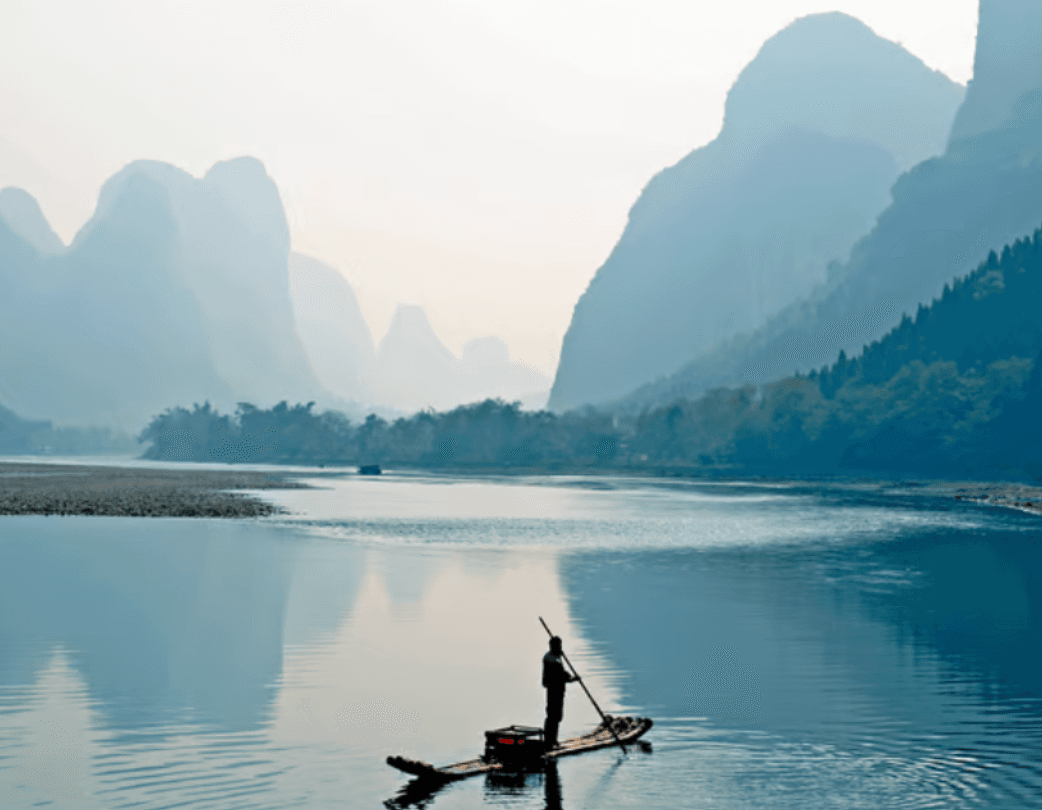
From Guangzhou or Shenzhen, the karst mountains of Guilin and Yangshuo draw travelers seeking China's most iconic natural scenery. A cruise down the Li River passes landscape formations that have graced countless Chinese paintings and photography. The town of Yangshuo provides rock climbing, cycling through rice paddies, and a backpacker atmosphere that offers respite from urban intensity. Hong Kong sits just an hour from Shenzhen, offering world-class dining, unrestricted internet access, and a fascinating blend of East and West [1].
How Should You Plan Around the Seasons?
Spring brings some of China's most spectacular seasonal displays. Cherry blossoms transform Wuhan and Nanjing in March and April, while vast fields of rapeseed flowers paint Yunnan and Guizhou provinces brilliant yellow. The weather permits comfortable hiking before summer's oppressive heat arrives. Temple festivals occur throughout the season, offering glimpses into traditions that have continued for centuries [2].
Summer demands strategic destination choices. Central and southern China become nearly unbearable with temperatures exceeding thirty-five degrees Celsius and humidity that makes outdoor activity exhausting. Smart travelers head to mountain retreats where altitude provides relief, or to northern grasslands in Inner Mongolia where the climate remains pleasant. Coastal destinations like Qingdao offer beaches and sea breezes along with German colonial architecture and excellent local beer.
Autumn represents the ideal travel season across most of China. Pleasant temperatures, clear skies, and fall foliage create perfect conditions nearly everywhere. Jiuzhaigou in Sichuan province transforms into a wonderland of colored lakes and autumn leaves, while Kanas Lake in Xinjiang's far northwest offers equally stunning scenery for those willing to make the journey. During autumn, almost any destination rewards a visit.
Winter opens unique opportunities for those willing to embrace cold weather. The Harbin Ice and Snow Festival, running from January through February, features massive ice sculptures illuminated in fantastic colors. Northeast China offers skiing at resorts like Yabuli. Those seeking warmth can escape to Hainan Island, China's tropical southern province where beaches and palm trees provide stark contrast to northern winter [1].
How Much Should You Budget for Weekend Travel?
Weekend trips in China accommodate nearly any budget. A frugal traveler can explore comfortably on around five hundred RMB total, including second-class train tickets, youth hostel accommodation, street food and simple restaurants, and free or low-cost attractions. This approach not only saves money but often produces the most authentic experiences and opportunities to meet other travelers [2].
Mid-range travelers typically spend twelve hundred to fifteen hundred RMB for a weekend, upgrading to first-class trains, three-star hotels with private bathrooms, a mix of local and nicer restaurants, and paid attractions with entrance fees. This level provides comfort without extravagance and suits most teachers seeking relaxation alongside exploration.
Luxury weekends start around three thousand RMB and can go much higher. Business-class trains or flights, five-star hotels or boutique resorts, fine dining, and private tours or premium experiences justify the additional cost for special occasions or when you simply want to be pampered. China offers genuine luxury at prices that would be impossible in Western countries [1].
What Practical Matters Should You Consider?
Packing for weekend trips becomes routine once you establish a system. Your passport or residence permit is essential, as hotels require identification for check-in and train stations verify identity for ticket collection. A phone charger and power bank keep you connected, while a translation app with offline capabilities like Pleco proves invaluable when wandering beyond tourist infrastructure. Cash remains important in smaller towns where mobile payment may not cover everything. Comfortable walking shoes and a light jacket for unpredictable weather round out the essentials [2].
The language barrier challenges travelers venturing off the beaten path, but solutions exist. Screenshot your destination and hotel address in Chinese characters to show taxi drivers who may not read pinyin. Get business cards from hotels to ensure you can return. Consider booking English-speaking tours through apps like Ctrip or Klook for complex trips where navigation would otherwise be difficult.
Safety concerns rarely materialize for travelers in China. Violent crime is remarkably rare, hotels and trains are secure, and police, while often unable to communicate in English, are generally helpful. Standard precautions apply, such as watching belongings in crowded areas and using official taxis or the DiDi app rather than accepting rides from random drivers. The bigger risk is usually overexertion from trying to see too much rather than any security threat [1].
When Should You Avoid Traveling?
Three periods on the Chinese calendar transform normally pleasant travel into exhausting ordeals. Chinese New Year in late January or early February sees the largest annual human migration as workers return to their hometowns. National Day Golden Week from October first through seventh mobilizes domestic tourism on a massive scale. The May Day holiday in early May creates similar though slightly smaller crowds [2].
During these periods, tourist sites become uncomfortably packed, prices double or triple, and train tickets sell out weeks in advance. Experienced expats typically use these holidays for international travel to Southeast Asia, Japan, or Korea, or simply enjoy staycations while China's domestic tourists flood the transportation network. The crowds genuinely need to be experienced to be believed, and avoiding them requires planning travel around these dates.
How Can You Make Weekend Travel a Habit?
The teachers who explore China most thoroughly share a common approach: they make travel a regular practice rather than an occasional indulgence. Joining a travel-focused WeChat group provides instant companions for trips and collective knowledge about destinations. Setting a goal of visiting one new place per month creates sustainable momentum. Booking midweek for weekend departures becomes routine rather than something requiring special planning [1].
Document your adventures through photos, journal entries, or social media posts. These records become treasures when your China years end and memory begins to fade. They also serve as resources for fellow teachers planning their own explorations.
Your time teaching in China is finite. The weekend adventures you take will become some of your most cherished memories, the sunrise over Huangshan's misty peaks, street food discoveries in Chengdu's alleys, boat rides through ancient water towns, and conversations with fellow travelers from around the world. China is vast, diverse, and endlessly fascinating. The only way to discover it is to get out there and explore.
Frequently Asked Questions
How far can I travel for a weekend from Shanghai?
High-speed trains make 1,000km+ trips possible. Beijing is 4.5 hours away. For 2-night trips, you can reach Xi an, Hangzhou, Huangshan, or water towns. For 1-night trips, stay within 2-3 hours travel time.
How much does a weekend trip in China cost?
Budget trips cost around ¥500 (hostel, 2nd class train, street food). Mid-range is ¥1,200 (3-star hotel, 1st class train, nice restaurants). Luxury can be ¥3,000+ with 5-star hotels and premium experiences.
When should I avoid traveling in China?
Avoid Chinese New Year (late Jan/Feb), National Day Golden Week (Oct 1-7), and May Day (May 1-5). Tourist sites are extremely crowded, prices double or triple, and trains book out weeks ahead.
Related Articles
Sources & References
- Trip.com China Travel Guidewebsite
- Lonely Planet Chinawebsite
Click citation numbers like [1] in the article to jump to references.
Ready to Start Your Teaching Journey in China?
Explore teaching opportunities and find your perfect match in China.
Loading...